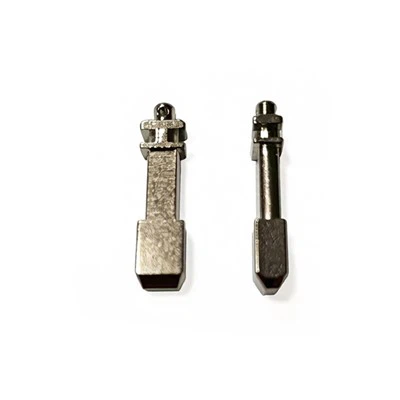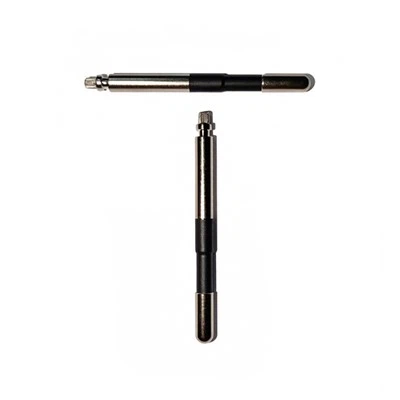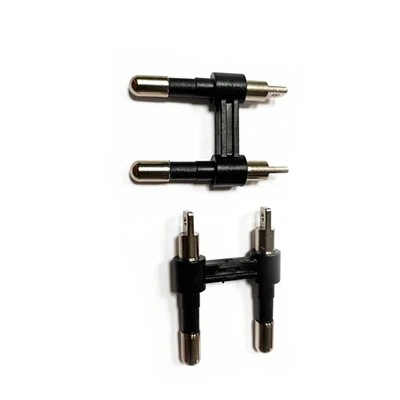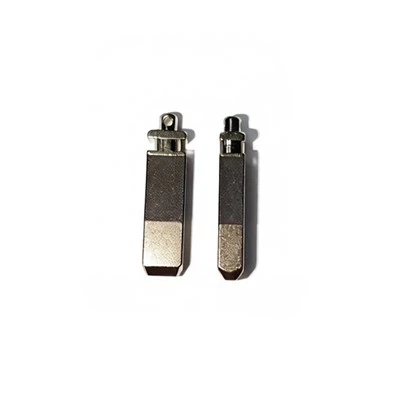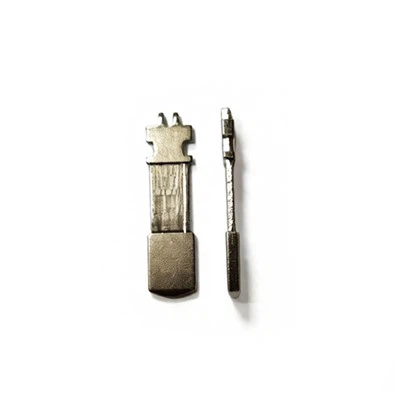


As a supplier of Copper UK Plug Insert Pins, I often encounter various questions from customers, one of the most common being about the thermal expansion coefficient of these pins. In this blog, I will delve into this topic, providing you with a comprehensive understanding of the thermal expansion coefficient of Copper UK Plug Insert Pins.
Understanding Thermal Expansion
Thermal expansion is a fundamental physical phenomenon where materials change in size or volume in response to temperature variations. When a material is heated, its molecules gain energy and move more vigorously, causing the material to expand. Conversely, when cooled, the molecules lose energy, and the material contracts. The thermal expansion coefficient is a measure of how much a material expands or contracts per unit length or volume for a given change in temperature.
Thermal Expansion Coefficient of Copper
Copper is a widely used metal in electrical applications, including UK plug insert pins, due to its excellent electrical conductivity, corrosion resistance, and mechanical properties. The linear thermal expansion coefficient of pure copper at room temperature (around 20°C) is approximately 16.5 x 10^-6 /°C. This means that for every degree Celsius increase in temperature, a copper rod of 1 meter in length will expand by about 16.5 micrometers.
Significance of Thermal Expansion in UK Plug Insert Pins
In the context of UK plug insert pins, the thermal expansion coefficient is of great importance. When an electrical current passes through the pins, heat is generated due to the resistance of the copper. If the pins expand too much due to the heat, it can lead to issues such as loose connections, increased resistance, and even overheating. On the other hand, if the pins contract significantly when the temperature drops, it can also cause problems with the fit and stability of the plug.
Factors Affecting the Thermal Expansion of Copper UK Plug Insert Pins
While the thermal expansion coefficient of pure copper is well - defined, several factors can affect the actual thermal expansion of Copper UK Plug Insert Pins:

Alloying
Most UK plug insert pins are not made of pure copper but rather copper alloys. Alloying elements can alter the thermal expansion coefficient of copper. For example, adding small amounts of elements like zinc or tin can change the crystal structure of the alloy, resulting in a different thermal expansion behavior compared to pure copper.
Manufacturing Process
The manufacturing process of the plug insert pins can also influence their thermal expansion. Processes such as cold working, annealing, and heat treatment can affect the internal structure of the copper, which in turn can impact its thermal expansion properties.
Environmental Conditions
The operating environment of the plug insert pins plays a crucial role. If the plugs are used in high - temperature environments, the pins will experience more significant thermal expansion. Additionally, factors such as humidity and chemical exposure can also affect the performance of the pins and their thermal expansion characteristics.
Applications and Considerations
In the design and use of UK plug insert pins, engineers need to take the thermal expansion coefficient into account. For example, when designing the socket for the plug, the clearance between the pins and the socket should be designed to accommodate the thermal expansion of the pins. This ensures that the plug remains securely inserted and the electrical connection remains stable under different temperature conditions.
Moreover, for applications where temperature fluctuations are significant, such as in industrial settings or outdoor environments, special considerations may be required. This could involve using materials with lower thermal expansion coefficients or implementing heat - dissipation mechanisms to reduce the temperature rise of the pins.
Our Products and Their Thermal Expansion Characteristics
As a supplier of Copper UK Plug Insert Pins, we are committed to providing high - quality products with consistent thermal expansion properties. Our pins are made from carefully selected copper alloys, and our manufacturing processes are optimized to ensure that the thermal expansion of the pins is within the acceptable range.
We offer a variety of products, including UK Plug Insert Pin Brass Plug Ground Pin, Brass Plug Insert Insulation Pin, and Brass Insulation Pin for British Plug. These products are designed to meet the highest standards of quality and performance, taking into account the thermal expansion requirements of the electrical applications.
Contact Us for Procurement
If you are in the market for high - quality Copper UK Plug Insert Pins, we invite you to contact us for procurement discussions. Our team of experts is ready to provide you with detailed information about our products, including their thermal expansion properties, and help you select the most suitable products for your specific needs. Whether you are an electrical equipment manufacturer, a distributor, or an end - user, we are here to serve you.
References
- "Properties of Copper and Copper Alloys" by ASM International.
- "Thermal Expansion in Engineering" by John Wiley & Sons.